

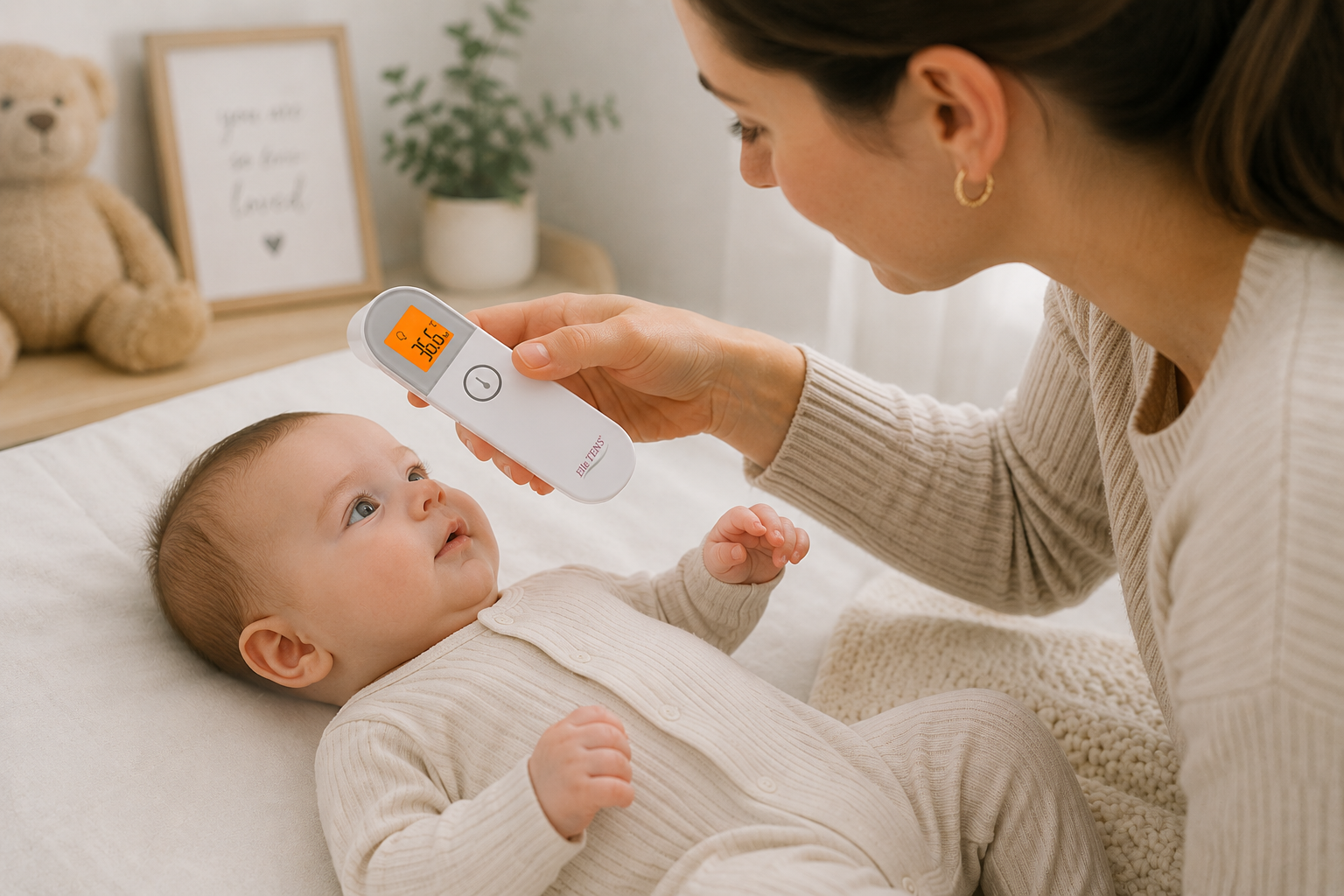
Quick answer: A normal temperature for a baby or child is about 36.5°C to 38°C. A reading of 38°C or above is a fever. A baby under 3 months with a temperature of 38°C or higher should be seen by a doctor straight away, even if they seem otherwise well. For older babies, watch how your child is behaving as much as the number.
Few things send a new parent reaching for the thermometer faster than a hot, grizzly baby. Knowing what a normal temperature looks like, and what actually counts as a fever, takes a lot of the worry out of those moments. Here is a clear, Australian guide to baby temperatures, what the numbers mean, and when to seek help.
What is a normal baby temperature?
A healthy baby or child usually sits somewhere between 36.5°C and 38°C. Body temperature naturally moves around a little through the day. It tends to be slightly lower in the morning and higher in the late afternoon and evening, and it can rise after a feed, a warm bath, a big play, or a long cuddle under a blanket. A single slightly high reading in a happy, feeding, playing baby is rarely a concern on its own.
What temperature is a fever in a baby?
In Australia, a fever is generally a temperature of 38°C or above. A fever is not an illness in itself. It is a sign that the body is responding to something, most often a common viral infection. The height of the fever does not always match how unwell your child is. Some children stay bright and playful at 38.5°C, while others are miserable at 38°C. That is why how your baby looks and behaves matters as much as the number on the screen.
Does the reading change with the method?
Different thermometers measure in slightly different ways, so it helps to know roughly what to expect:
- Forehead (non-contact infrared): fast and easy, ideal for sleeping babies. Hold it close to a clean, dry forehead and scan.
- Ear (tympanic): quick and generally accurate in older babies and children when positioned correctly.
- Underarm (armpit) digital: simple and safe, though it can read a little lower than core temperature.
The most useful habit is to use the same thermometer and the same method each time. That way you are comparing like with like and can see whether a temperature is rising or settling. For step-by-step technique, see our guide on how to use a forehead thermometer correctly.
When to worry: a simple age guide
Babies under 3 months: this is the most important group. If your baby is under 3 months and has a temperature of 38°C or higher, treat it as urgent and have them seen by a doctor or hospital straight away, even if there are no other symptoms.
Babies 3 to 6 months: see a doctor if the temperature reaches around 39°C, or sooner if your baby seems unwell.
Older babies and children: the number matters less than the whole picture. Seek medical advice if your child is very drowsy or hard to wake, is having trouble breathing, has a rash that does not fade when pressed, is not drinking and has fewer wet nappies, has a fever lasting more than two to three days, or simply does not seem right to you.
Trust your instincts. You know your child best, and if you are worried, it is always worth getting them checked.
Helping your baby feel more comfortable
For most older babies, a fever itself does not need to be treated unless your child is uncomfortable or in pain. You can help them feel better by offering regular feeds or fluids, dressing them in light clothing, and keeping the room at a comfortable temperature. If your child is distressed, your pharmacist or GP can advise on the right pain or fever relief and dose for their age and weight. Never give medicine to a baby under 3 months without medical advice.
An easy, accurate way to check
Having a reliable thermometer within reach makes those midnight checks far less stressful. The Elle TENS infrared thermometer gives a non-contact forehead reading in about one second, with a fever alert and a switch between adult and child modes, so you can check your little one without waking them.
Frequently asked questions
Is 37.5°C a fever in a baby?
No. 37.5°C is within the normal range. A fever starts at 38°C. A reading of 37.5°C in a well, active baby is usually nothing to worry about.
What is the normal temperature range for a newborn?
Around 36.5°C to 38°C, the same as older babies. For newborns under 3 months, any reading of 38°C or above should be checked by a doctor promptly.
Can teething cause a high temperature?
Teething may cause a mild rise in temperature but it does not cause a true fever. If your baby has a temperature of 38°C or above, look for another cause rather than assuming it is teething.
Should I wake my baby to check their temperature?
Usually not. A non-contact forehead thermometer lets you check a sleeping baby without disturbing them. If your baby is feeding and settling well, the number alone is rarely a reason to wake them.
How long should a fever last?
Most fevers from common viral illnesses settle within a few days. See a doctor if a fever lasts more than two to three days, climbs higher, or your child becomes more unwell.
Sources
Healthdirect Australia, Fever and high temperature in children and babies. Pregnancy, Birth and Baby, Fever in babies. The Royal Children's Hospital Melbourne, Fever in children. Raising Children Network, High temperature or fever in children.
This article is general information only and is not a substitute for medical advice. If you are worried about your child, contact your GP, call Healthdirect on 1800 022 222, or in an emergency call 000.
Keep an accurate thermometer on hand
The Elle TENS infrared thermometer gives fast, non-contact forehead and ear readings for the whole family, with a fever alert.


