

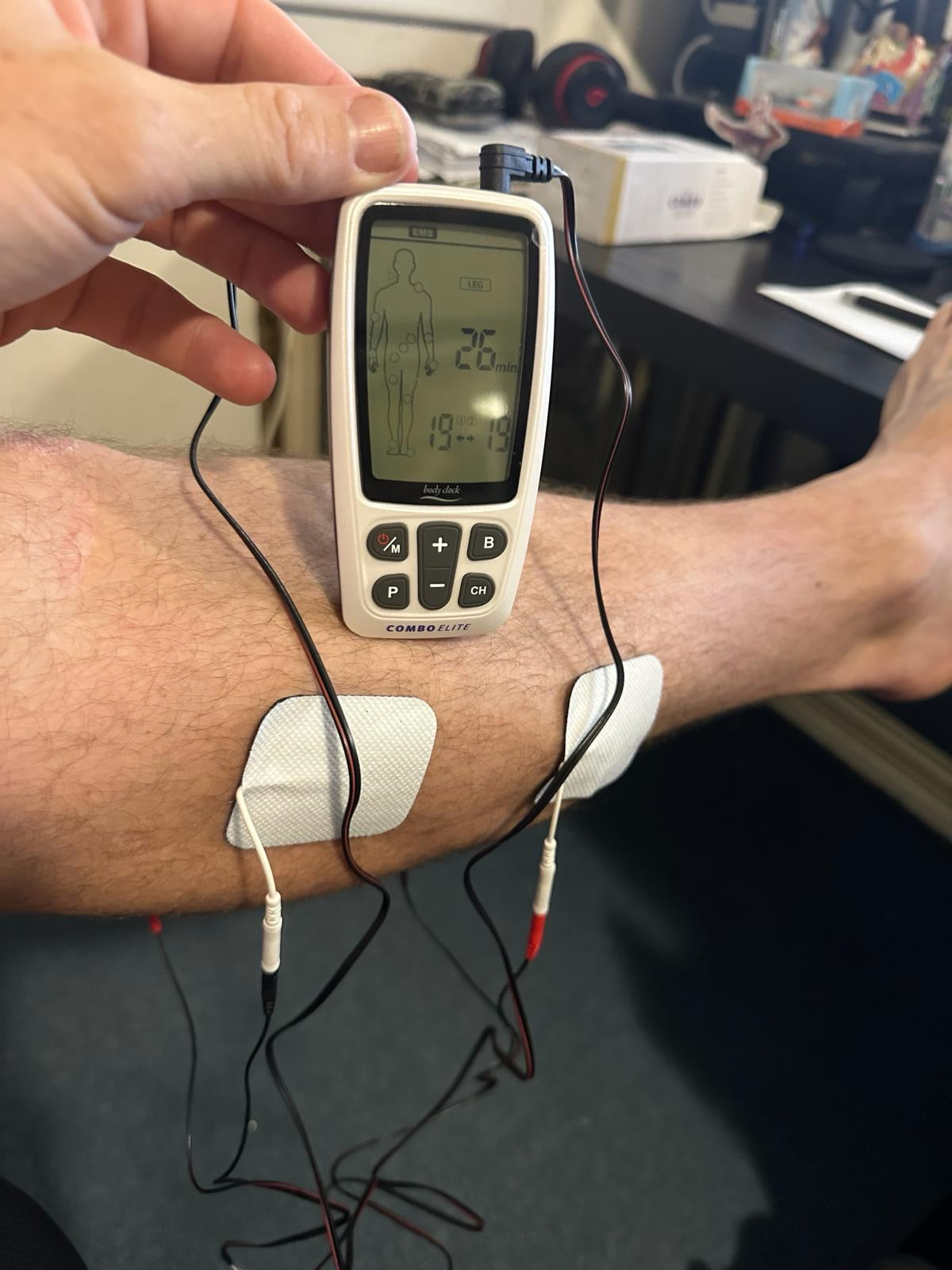
Quick answer: TENS stimulates nerves to relieve pain. EMS stimulates muscles to make them contract, which strengthens and rehabilitates them. If your goal is pain relief, for labour, back pain or period pain, you want TENS. If your goal is rebuilding muscle, such as pelvic floor recovery after birth, you want EMS. Some devices, like the Elle TENS Plus, include both.
The one-sentence difference
TENS (Transcutaneous Electrical Nerve Stimulation) targets sensory nerves to block pain signals and trigger endorphins. EMS (Electrical Muscle Stimulation) targets motor nerves to make muscles contract and release, like a workout you do not have to think about.
How TENS works
TENS sends gentle pulses through skin pads to the nerves that carry touch signals. Those signals crowd out pain signals on their way to the brain, and the stimulation prompts your body to release endorphins. The result is drug-free pain relief that builds the longer you use it. The full mechanism is explained in our guide How does a TENS machine work?
How EMS works
EMS uses a different pulse pattern aimed at motor nerves, the ones that tell muscles to move. The stimulation causes the muscle to contract, hold, and release in cycles. Done repeatedly, this strengthens muscles in exactly the way exercise does, which is why EMS is used in physiotherapy, sports rehabilitation, and pelvic floor recovery after childbirth, where the muscles can be difficult to exercise voluntarily.
Which one do you need?
Ask what outcome you want. Pain relief for labour, back, neck, period or arthritis pain: TENS. Rebuilding strength in a weakened muscle, including the pelvic floor after birth or bladder control issues: EMS. Recovery from a sports injury often uses both at different stages, pain control first, strengthening second.
| TENS | EMS | |
|---|---|---|
| Targets | Sensory nerves | Motor nerves (muscles) |
| Goal | Pain relief | Muscle strengthening |
| Feels like | Tingling, buzzing | Muscle contracting and releasing |
| Common uses | Labour, back pain, period pain, arthritis | Pelvic floor recovery, sports rehab, physiotherapy |
Devices that do both
The Elle TENS Plus is a 3-in-1 device: an obstetric TENS for labour, an everyday TENS for general pain, and an EMS pelvic floor toner used from approximately 12 weeks after vaginal delivery. That last mode is why many mums buy the Plus rather than hiring, as it keeps working long after the birth. For dedicated pelvic floor care, our SensaTONE range is a purpose-built EMS device.
Frequently Asked Questions
Is EMS better than TENS for pain?
No, they do different jobs. TENS is designed for pain relief. EMS is designed for muscle strengthening. EMS can ease some muscular discomfort by improving muscle condition over time, but for direct pain relief TENS is the right tool.
Can EMS help my pelvic floor after birth?
Yes. Pelvic floor EMS stimulates the muscles to contract and strengthen, which supports recovery from approximately 12 weeks after a vaginal delivery. The Elle TENS Plus includes this mode, and the SensaTONE is a dedicated pelvic floor EMS device.
Can one device do both TENS and EMS?
Yes. Combination devices like the Elle TENS Plus offer TENS programs for labour and pain plus an EMS mode for pelvic floor toning. Check that any combination device is obstetric-certified if you plan to use it for labour.
Is EMS safe?
EMS is widely used in physiotherapy and is considered safe for most people. The same precautions as TENS apply: seek medical advice first if you have a pacemaker or implanted device, epilepsy or a heart condition, and follow the device instructions for placement.
Do physiotherapists use TENS or EMS?
Both. TENS for pain management, EMS for muscle re-education and strengthening. Many physiotherapy treatment plans move from TENS to EMS as pain settles and rehabilitation begins.
Related pages
One device for labour, pain and pelvic floor


