

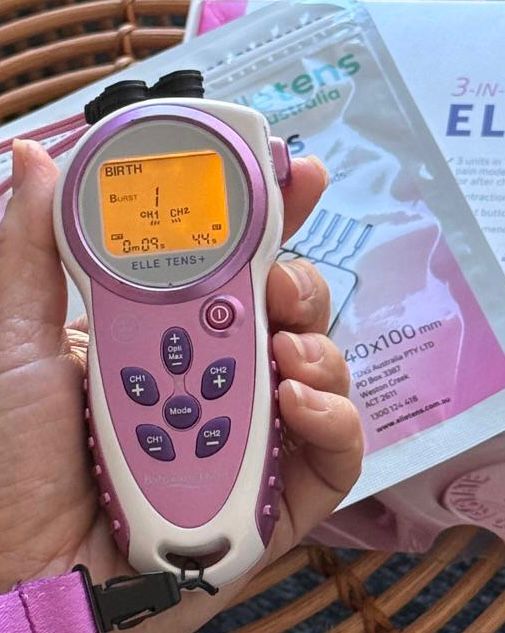
Quick answer: A TENS machine provides drug-free relief for many kinds of pain. In Australia the most common uses are labour and childbirth, back, neck and joint pain, period pain and endometriosis-related pain, arthritis, sports injuries, and postnatal afterpains. The same device works across all of them; only the pad placement changes.
One mechanism, many uses
TENS relieves pain by blocking pain signals to the brain and triggering endorphins, your body's natural painkillers. Because that mechanism is the same wherever the pain is, one device covers a remarkable range of conditions. What changes is where you place the pads and which program you run. The science is explained in How does a TENS machine work?
Labour and childbirth
The most recognised use in Australia. Obstetric TENS machines like the Elle TENS 2 add labour-specific features: a boost button for contraction peaks, a contraction timer, and large maternity electrodes for the lower back. TENS can be used from the first contraction through to birth, on its own or alongside other pain relief. See What is the best TENS machine for labour in Australia? for choosing a device.
Period pain and endometriosis
TENS is increasingly used for menstrual pain and endometriosis-related pain, with pads placed on the lower abdomen or lower back. It is drug-free, which matters for pain that recurs every month, and it can be worn discreetly under clothing at work or home. Many mums who hired a TENS for labour later use one for period pain when cycles return.
Back, neck and joint pain
Back pain is the classic TENS use, the reason the technology entered physiotherapy clinics 50 years ago. Pads are placed either side of the painful area. For arthritis and joint pain, TENS offers relief that can be repeated daily without the interactions and side effects of long-term medication, used alongside whatever your doctor has prescribed.
Sports injuries and recovery
Athletes use TENS for muscle and joint pain after injury and training. It is often paired with EMS, which strengthens muscles during rehabilitation; the difference between the two is explained in our TENS vs EMS guide.
After the birth
TENS can help with postnatal afterpains, the contractions felt as the uterus returns to size, particularly in the first days of breastfeeding. The Elle TENS Plus also includes an EMS pelvic floor mode for recovery from approximately 12 weeks after a vaginal delivery, making it a device that keeps working well beyond the birth.
When TENS is not the answer
TENS manages pain; it does not treat the cause. New, unexplained or worsening pain should always be assessed by a doctor first. And a small group of people should seek medical advice before using TENS at all, covered in Are TENS machines safe?
Frequently Asked Questions
Can a TENS machine help period pain?
Yes. TENS is widely used for menstrual and endometriosis-related pain, with pads on the lower abdomen or lower back. It is drug-free and can be worn discreetly under clothing for as long as relief is needed.
Can I use my labour TENS for other pain afterwards?
If you purchased an Elle TENS Plus, yes. It includes everyday pain relief programs and a pelvic floor EMS mode alongside its labour functions. Hired devices are returned after the birth, which is one reason some mums choose to buy.
Does TENS replace pain medication?
No, it works alongside it. TENS is drug-free, so it does not interact with medication, and many people find they need less medication when using TENS. Any change to prescribed medication should be discussed with your doctor.
Can men use TENS machines?
Yes. TENS works the same way for everyone, and is widely used by men for back pain, joint pain and sports recovery. Obstetric features like the contraction timer are labour-specific, but TENS itself is universal.
How often can I use a TENS machine?
TENS can be used multiple times a day, and in labour continuously for hours. Follow your device's instructions, give skin under the pads a rest between long sessions, and reposition pads if skin feels irritated.


