

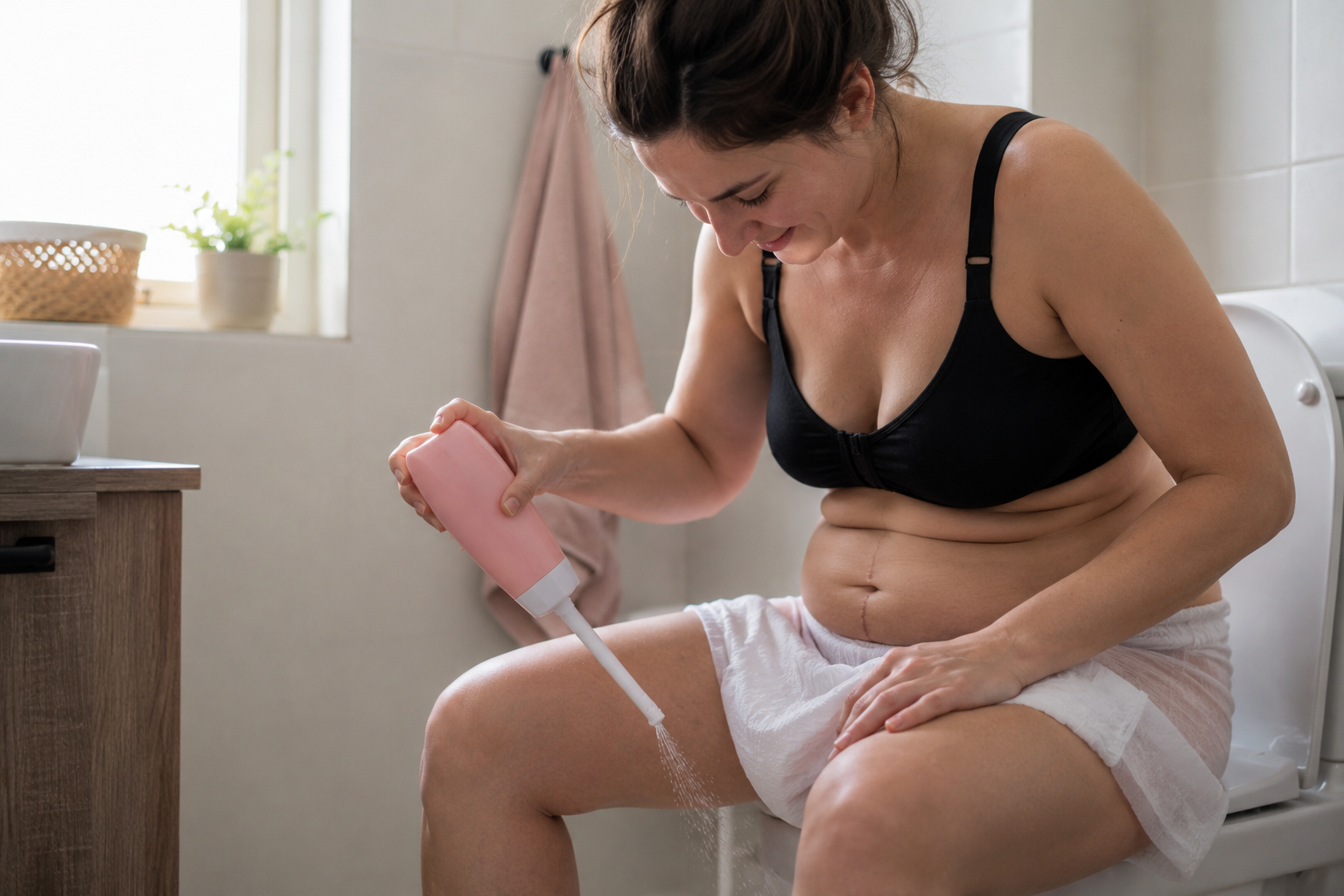
Quick answer: Fill the peri bottle with warm water, sit or lean slightly back on the toilet, aim the angled nozzle at your perineal area, and squeeze a gentle stream while you pass urine and afterwards. The water dilutes urine and rinses the area so there is no painful wiping. Pat dry gently from front to back. Use it every time you go to the toilet for the first few weeks, and keep it on hand afterwards as an everyday portable bidet.
A peri bottle is simple to use, and a little technique makes it even more soothing. Here is exactly how to use one after birth, plus how it helps beyond recovery.
Step by step
- Fill with warm water. Use clean, comfortably warm water, around 400ml. Warm is far more soothing than cold over stitches.
- Fit the angled nozzle. An angled nozzle reaches the area without you having to twist or strain. The Elle TENS Peri Bottle includes both an angled and a straight nozzle so you can choose what feels best.
- Get into position. Sit on the toilet and lean back slightly, or stand and lean forward, whatever is comfortable.
- Aim and squeeze. Point the nozzle toward the perineal area and squeeze gently to release a steady stream. Start the flow as you begin to pass urine so the water dilutes it and stops the sting.
- Keep rinsing. Continue the gentle stream until you feel clean, refilling if needed.
- Pat dry. Dab gently from front to back with soft toilet paper or a clean cloth. Do not rub.
- Rinse and store. Empty the bottle, rinse it, let it air dry, and keep it in its pouch for next time.
Tips for stitches and tender skin
- Start squeezing before urine flows, so the area is already being diluted.
- Keep the water warm, not hot, for comfort.
- Use a fresh fill of clean water each time.
- Always pat, never wipe hard, and go front to back to keep things hygienic.
Can you use a peri bottle for a bowel movement?
Yes. Many people find rinsing with a peri bottle gentler than wiping after a bowel movement, especially with stitches or haemorrhoids. Rinse the area with the gentle stream, then pat dry from front to back. It is a kinder alternative to toilet paper while you heal.
Using your peri bottle as a portable bidet
The same technique works for everyday use long after the early weeks. The bottle is a genuinely practical manual portable bidet, so keep it handy for:
- Everyday freshness. A gentle rinse after the toilet instead of relying on paper alone.
- Travel and camping. A compact, leak-proof bidet that needs no power or charging.
- Period care. Warm-water cleansing to feel fresh during your period.
- Light bladder leaks. A quick, discreet freshen-up if you manage mild incontinence.
- Haemorrhoids. Soothing cleansing without rubbing, whenever you need it.
Same warm water, same gentle squeeze, simply aimed where you need it. Wondering how it stacks up against an electric travel bidet? See is a peri bottle a portable bidet?
How long should you use one?
Use it for as long as the area feels tender, commonly the first one to three weeks, and longer if stitches or haemorrhoids are still healing. There is no need to stop while it is keeping you comfortable. Beyond recovery, plenty of people keep using a peri bottle as a portable bidet. For more background, read what is a peri bottle and do you need one.
Keeping it clean
Rinse the bottle and nozzles with clean water after each use and let them air dry fully before storing. Every week or so, wash with warm soapy water and rinse well. A reusable, BPA-free bottle like the Elle TENS Peri Bottle is easy to keep hygienic.
Frequently asked questions
How do you use a peri bottle after birth?
Fill it with warm water, aim the angled nozzle at the perineal area, and squeeze a gentle stream while you pass urine and afterwards, then pat dry from front to back.
Do you use a peri bottle while peeing or after?
Both. Start the stream as you begin to pass urine so the water dilutes it and prevents stinging, then keep rinsing until you feel clean.
Can you use a peri bottle as an everyday or travel bidet?
Yes. A peri bottle is a manual portable bidet. The same warm-water rinse works for everyday freshness, period care, light bladder leaks, and as a no-power travel and camping bidet.
Should the water be warm or cold?
Warm. Comfortably warm water is far more soothing on stitches and tender skin than cold.
Can I use a peri bottle instead of toilet paper?
Yes. Rinsing then patting dry is gentler than wiping, which is why many people prefer it while healing and as an everyday habit.
How do I clean my peri bottle?
Rinse after each use and air dry. Wash with warm soapy water every week or so and rinse thoroughly.
Sources
Pregnancy, Birth and Baby, Looking after your body after having a baby. The Royal Women's Hospital, Your health after birth. Healthdirect Australia, Recovering from birth. Raising Children Network, Physical recovery after birth.
This article is general information only and is not a substitute for medical advice. If you have concerns about your recovery, signs of infection, or heavy bleeding, contact your midwife or GP, or call Healthdirect on 1800 022 222.
The peri bottle built for comfort
Dual interchangeable nozzle, leak-proof design and a gentle controlled stream. The Elle TENS Peri Bottle makes those first weeks easier and stays useful long after.


