

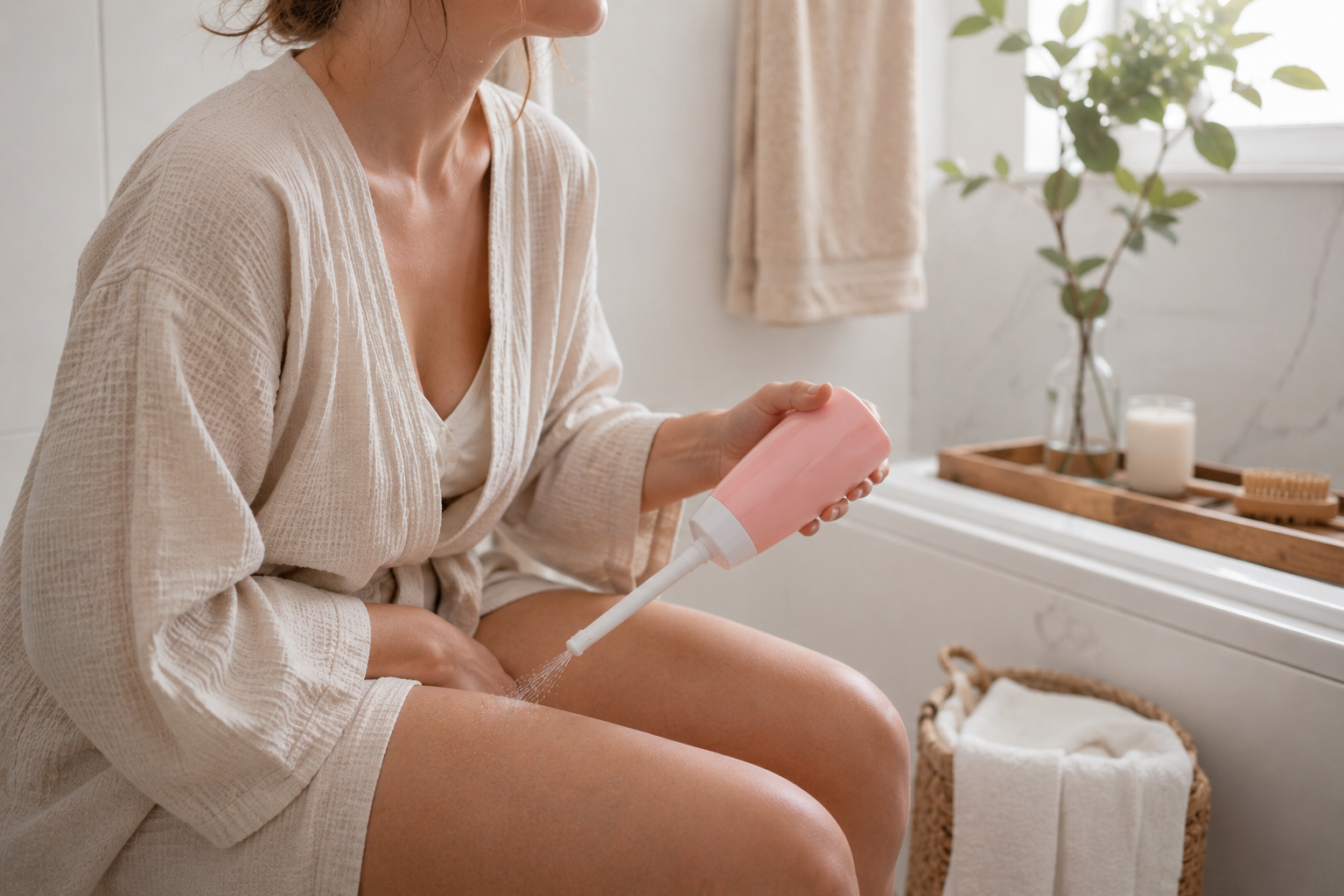
Quick answer: A peri bottle is a small squeeze bottle that sprays a gentle stream of water to clean the perineal area (between the vulva and anus) after going to the toilet. It is one of the most useful postpartum recovery items because it lets you stay clean and comfortable when wiping is painful, after both vaginal and caesarean births. It is also a manual portable bidet, so it doubles as an everyday bidet for periods, haemorrhoids and travel. Many midwives recommend having one ready in your hospital bag.
If you are putting together your hospital bag, the peri bottle is one small item that makes a big difference in those first tender weeks, and it stays useful long afterwards. Here is what it is, how it helps your recovery, and how to choose a good one.
What is a peri bottle?
A peri bottle, short for perineal bottle, is a squeezable bottle with an angled nozzle. You fill it with warm water and squeeze to direct a soft stream over the perineal area while you go to the toilet or afterwards. The water cleanses gently and dilutes urine so it does not sting sensitive or stitched skin. It is essentially a manual portable bidet that you control with a squeeze, no power or plumbing needed.
Why you need one after birth
After birth the perineal area is often swollen, tender, and may have stitches from a tear or episiotomy. Toilet paper can feel harsh, and passing urine over broken skin can sting. A peri bottle helps by:
- Rinsing the area gently so there is no rubbing with paper.
- Diluting urine as you go, which reduces stinging on stitches or grazes.
- Keeping the area clean while lochia (postnatal bleeding) continues.
- Soothing haemorrhoids, which are common after birth.
It is just as helpful after a caesarean, when bending and reaching are uncomfortable and gentle hygiene still matters.
How long do you use a peri bottle?
Most people use a peri bottle for as long as the area feels tender, commonly the first one to three weeks, and longer if you have stitches or haemorrhoids that are still healing. There is no rush to stop. Keep using it for as long as it keeps you comfortable.
Other ways to use a peri bottle
A peri bottle is far more versatile than its postpartum reputation suggests. Once recovery is behind you, the same bottle is genuinely handy for:
- An everyday portable bidet. Gentle, paper-free cleansing after using the toilet, at home or while travelling.
- A travel and camping bidet. Compact, leak-proof and needs no power, so it goes wherever you do.
- Period care. A quick warm-water rinse to feel fresh and comfortable during your period.
- Light bladder leaks. A discreet way to freshen up if you manage mild incontinence.
- Haemorrhoid relief. Soothing cleansing without rubbing, useful at any age, not only after birth.
- Around the house. Its long, controlled spout even makes a tidy little watering bottle for those easy-to-overwater bathroom plants.
In short, it is a simple manual portable bidet. If you are weighing it up against the electric travel bidets you see online, read is a peri bottle a portable bidet? for how they compare.
What makes a good peri bottle?
They are not all the same. The things that matter most are:
- Nozzle angle. An angled nozzle reaches the area easily without you having to twist or strain. Some bottles only have a basic straight spout.
- Leak-proof design. A bottle that does not drip in your bag is far more practical to carry.
- Capacity. Around 400ml gives you enough water for a thorough rinse in one fill.
- Comfortable squeeze. A soft, controlled stream is gentler than a forceful one.
The Elle TENS Peri Bottle was designed around exactly these points. It comes with two interchangeable nozzles, angled and straight, so you can reach comfortably with minimal movement, plus a leak-proof, no-air-valve design and a 400ml capacity. For step-by-step technique, see how to use a peri bottle after birth.
Frequently asked questions
What is a peri bottle used for?
Cleansing the perineal area with a gentle stream of water after the toilet, mainly during postpartum recovery, though it also works as an everyday portable bidet for periods, light bladder leaks, haemorrhoid relief and travel.
Is a peri bottle a portable bidet?
Yes. A peri bottle is a manual portable bidet. You squeeze it to create a gentle stream that cleanses just like a fitted or electric bidet, only simpler, with no batteries, and you can carry it anywhere.
Can you use a peri bottle when you are not postpartum?
Absolutely. Many people keep using one as an everyday bidet, for period freshness, for managing light incontinence, or for soothing haemorrhoids. It is useful well beyond the early weeks after birth.
Do I really need a peri bottle?
It is not compulsory, but most new mums find it one of the most useful recovery items because it makes those first weeks far more comfortable. Many hospitals recommend one.
Can I use a peri bottle after a caesarean?
Yes. It keeps the perineal area clean gently and avoids the bending and reaching that can be uncomfortable after a caesarean.
What water should I put in a peri bottle?
Clean, warm water is all you need. Warm water is more soothing than cold, especially over stitches.
Sources
Pregnancy, Birth and Baby, Looking after your body after having a baby. The Royal Women's Hospital, Your health after birth. Healthdirect Australia, Recovering from birth. Raising Children Network, Physical recovery after birth.
This article is general information only and is not a substitute for medical advice. If you have concerns about your recovery, signs of infection, or heavy bleeding, contact your midwife or GP, or call Healthdirect on 1800 022 222.
Make recovery more comfortable
The Elle TENS Peri Bottle has a unique dual interchangeable nozzle and a leak-proof design, built for gentle postpartum care and everyday use.


