

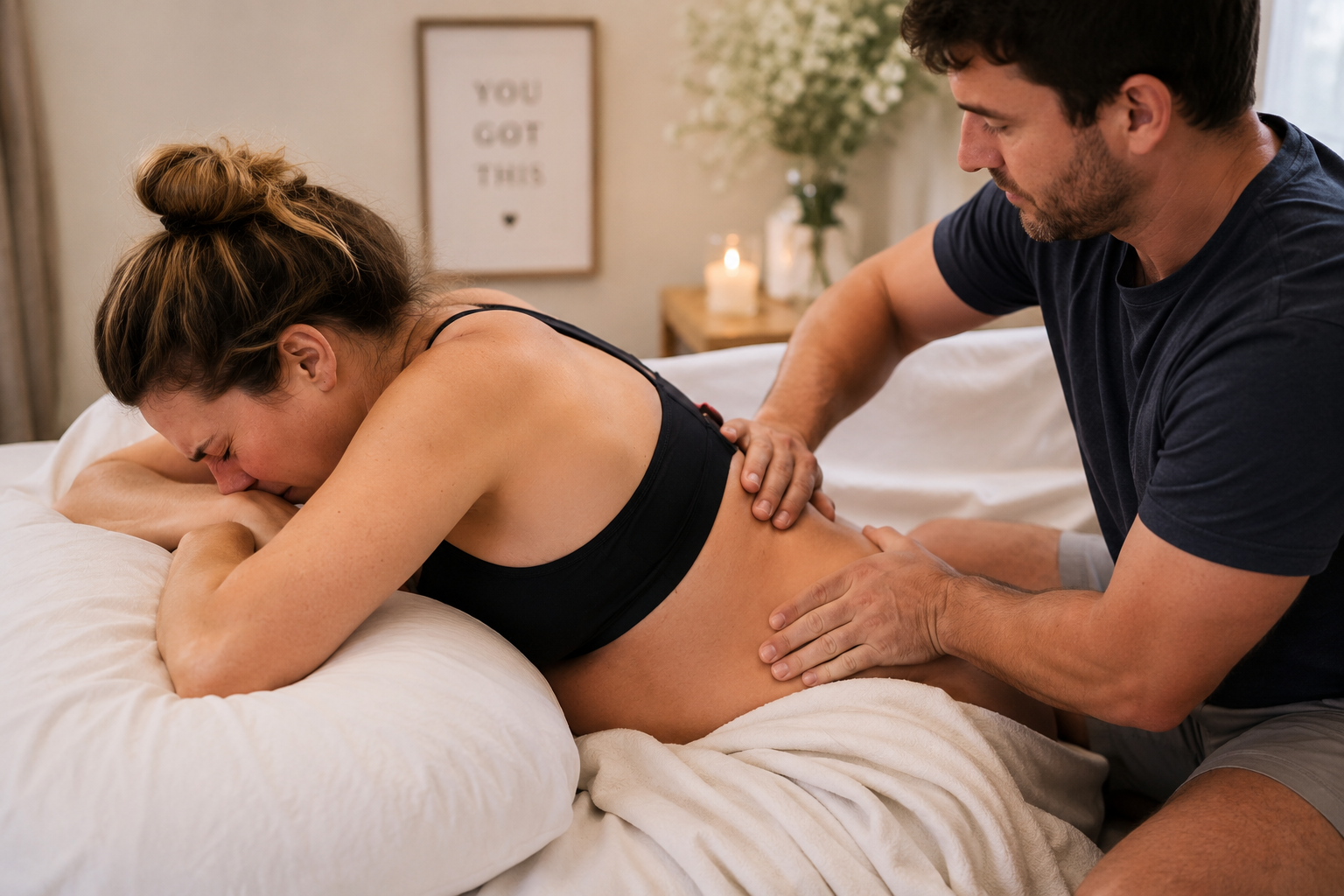
Quick answer: Massage and firm counter-pressure on the lower back are among the most effective drug-free ways to ease labour pain. The most useful techniques are lower-back counter-pressure, the double hip squeeze, and slow stroking between contractions. A massage roller ball lets your birth partner apply steady pressure for longer without their hands tiring.
Touch is powerful in labour. Massage helps you relax, calms the nervous system, and gives your birth partner a real, practical way to help. Here are the techniques worth practising before the big day.
Why massage helps in labour
Firm massage creates a strong, comforting sensation that competes with pain signals and helps your body relax, which can ease the intensity of contractions. It also lowers tension and stress, helping labour progress more comfortably, and it strengthens the sense of support between you and your partner. It works well alongside a labour TENS machine, warm water and movement.
Techniques that help
Lower-back counter-pressure. Your partner presses firmly on your lower back or the top of your buttocks during a contraction. This is especially helpful for back labour. A massage roller ball makes it easy to apply smooth, deep pressure without tiring.
The double hip squeeze. Your partner places a hand on each buttock and presses inward and slightly up during a contraction, which can relieve pressure in the pelvis.
Slow stroking. Long, light strokes down the back and arms between contractions help you relax and reset.
Shoulder and neck massage. Easing tension here helps your whole body let go.
Tips for birth partners
- Ask what feels good and adjust. Pressure that helps one moment may be too much the next.
- Keep pressure firm and steady during contractions, lighter in between.
- Use a massage ball or oil to save your hands over a long labour.
- Stay in a rhythm and keep your touch confident and reassuring.
For a step-by-step on the roller ball, see how to use a massage roller ball in labour and pregnancy.
Frequently asked questions
Does massage really help with labour pain?
Yes. Research on non-drug pain relief in labour supports massage as a helpful, low-risk way to ease pain and reduce anxiety.
What is counter-pressure?
Firm pressure applied to the lower back or hips during a contraction to relieve the intensity, especially useful for back labour.
Where should you massage during labour?
Most often the lower back, the top of the buttocks and the hips, plus the shoulders and back for relaxation between contractions.
Do I need a massage tool?
No, hands work, but a massage ball lets your partner give firm, even pressure for much longer without tiring.
Can I combine massage with other pain relief?
Yes. Massage pairs well with TENS, water, movement and breathing.
Sources
Cochrane review, Massage, reflexology and other manual methods for pain management in labour. Pregnancy, Birth and Baby, Pain relief during labour. The Royal Women's Hospital, Coping with labour.
This article is general information only and is not a substitute for medical advice. Talk with your midwife about pain relief options for your labour.
Make counter-pressure easy
The Elle TENS massage roller ball helps your partner give deep, steady relief without tiring their hands.


